
Palm Brush vs Handle Brush Which One Do Your Waves Actually Need
- mahirsardar606
- 22 hours ago
- 8 min read
I’ll be honest, I used to think a wave brush was just a wave brush. If it had bristles and looked decent on the bathroom shelf, I figured it would do the job.
Then I wasted money.
Early on, I bought a brush that looked clean, felt solid in my hand, and had no business being my main brush at that stage. My pattern was barely trained, my crown was all over the place, and I was trying to force progress with the wrong tool. Sound familiar?
That’s why this whole palm brush vs handle brush for waves conversation actually matters. Not because one is “better” in every situation, but because they do different jobs. Once I understood that, brushing got simpler. My sessions felt smoother. My connections started making more sense. And I stopped blaming my hair for problems my brush choice was creating.

The difference is in how the brush moves with your hand
A palm brush sits right in your hand. No handle, no extra reach, just your palm controlling the pressure and direction. That makes it feel natural, especially when you’re doing daily light work.
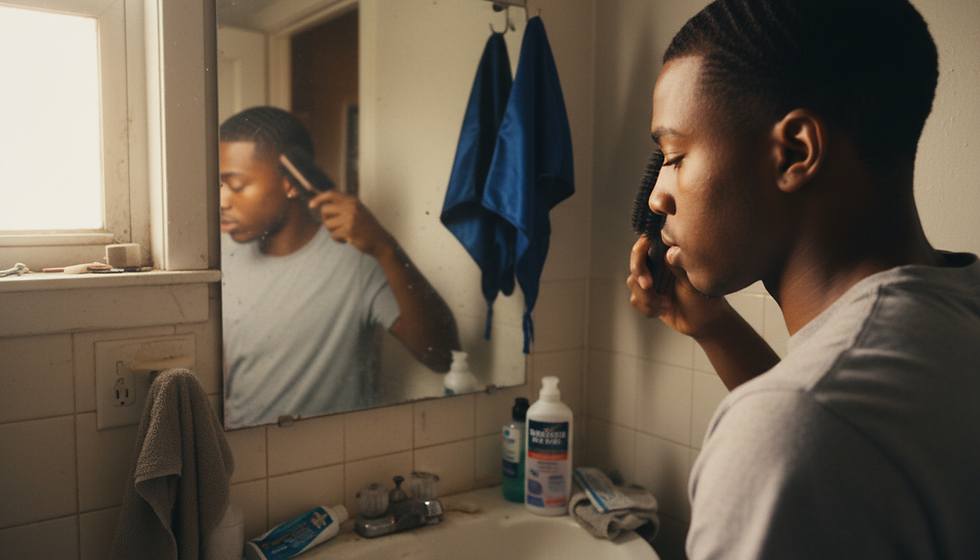
For me, the palm brush is the brush I grab when I’m not trying to fight my hair. I’m just laying things down, keeping the pattern active, and cleaning up the surface. It feels controlled because your hand is close to your scalp. You can feel the grain better. You know when you’re brushing with the pattern and when you’re drifting off angle.
That matters more than people admit.
With waves, a few lazy angles repeated every day can slowly train your hair the wrong way. The palm brush helps because it keeps you connected to what you’re doing. It’s especially nice around the sides and top, where the pattern is easier to feel.
A handle brush is different. That extra handle changes the whole motion. You get more reach, better leverage, and more room to pull through longer or thicker hair. It can feel less “intimate” than a palm brush, but it gives you power in spots where a palm brush can feel awkward.
The crown. The back. The lower sides. Those areas where you’re twisting your wrist like you’re trying to solve a puzzle behind your head.
That’s where the handle brush earns its place.
Palm brushes are for daily control and keeping the pattern honest
If my hair is already laid and I’m just trying to keep everything neat, I’m reaching for a palm brush most of the time.
A good palm brush is perfect for:
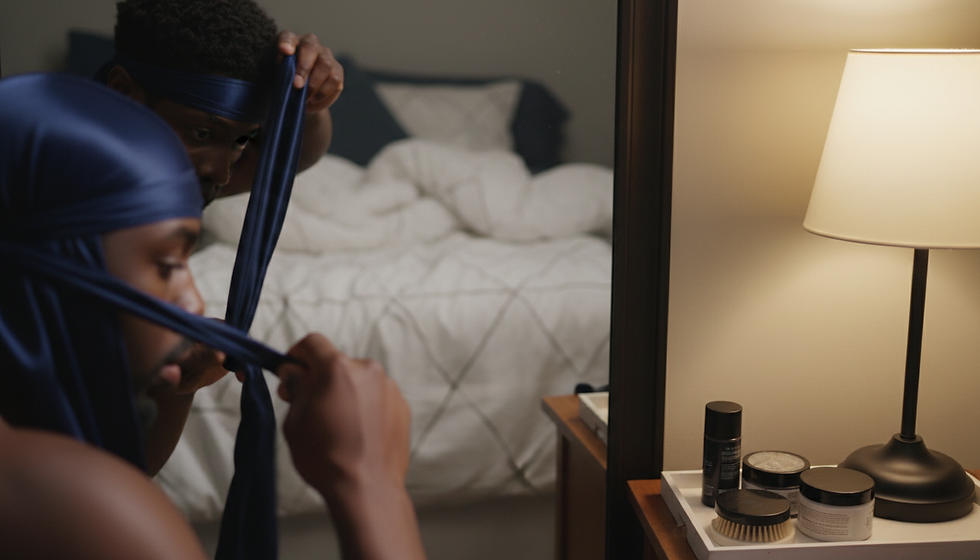
Light morning brushing before a durag
Touch-ups after taking the rag off
Reinforcing your wave pattern without overworking your scalp
Brushing with better feel and control
Keeping short cuts looking clean between wash days
The biggest thing is control. Since the brush is sitting directly in your hand, you’re less likely to overdo it. You’re not swinging from the wrist as much. You’re guiding the brush.
That makes palm brushes great when your waves are already starting to show and you’re trying to keep them lined up. You’re not always trying to “dig”. Sometimes you just need to remind the hair where to lay.
I think a lot of guys brush too aggressively because they feel like pressure equals progress. I’ve done it. You see a fork or a weak spot and think, “Let me attack this for twenty minutes.” Then your scalp feels irritated, your hair looks frizzy, and nothing really improved.
A palm brush can help slow that down. Not because it’s magic, but because it naturally fits lighter, cleaner brushing.
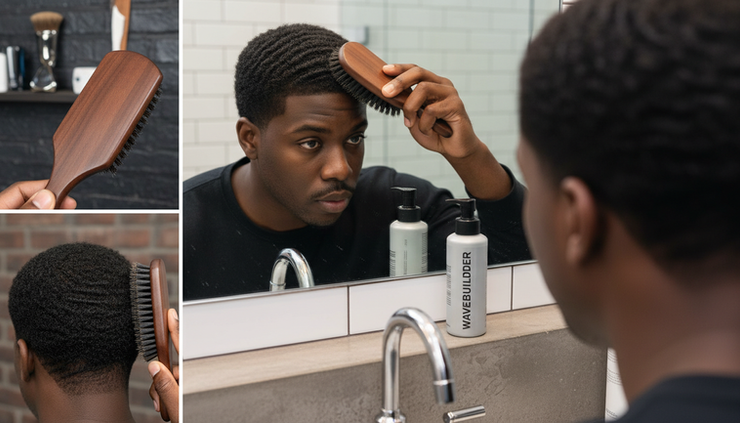
Handle brushes help when you need reach, pressure, and deeper connections
Now, if we’re talking about building deeper waves, stretching connections, and getting to those annoying angles at the back of your head, I’m not leaving the handle brush out.
A handle brush gives you reach. Simple as that.
When you’re brushing the crown, the back, or the lower angles, the handle lets you place the brush where it needs to go without your shoulder giving up halfway through the session. You can follow the pattern better because you’re not fighting your own arm position.
That’s a big deal with 360 waves.
The top is easy to obsess over because you can see it. The sides get attention because they’re right there in the mirror. But the back? The crown? That’s where a lot of patterns fall apart. And if your back angles are messy, the whole wave pattern can look disconnected even when the front is spinning.
A handle brush lets you take longer strokes and work through the hair with more force when needed. Not crazy force. I’m talking steady pressure, especially if your hair is thicker, wolfing, or still being trained.
This is where a lot of established wavers prefer handle brushes during serious sessions. If your waves are already deep but you’re trying to improve flow, fix forks, or tighten the crown area, the handle brush probably gets more use than you expected.
I still like a palm brush for finishing, but when I’m doing real work, especially after moisturising or during a longer brush session, I want that handle nearby.
Bristle hardness matters more than the shape sometimes
People get caught up asking about palm or handle, but ignore the bristles. That’s backwards.
The shape of the brush matters, but the bristle hardness decides how the brush actually treats your hair.
Here’s the simple version, without turning this into a science lesson.
Soft bristle brushes are for laying hair down, polishing the pattern, and brushing shorter cuts. If you just had a fresh trim, a soft brush makes sense. It’s also useful for finishing after you’ve already done your main session.
Medium bristle brushes are the safe middle ground for a lot of people. If your hair has some texture and length but isn’t super thick, medium gives you enough pull without feeling harsh. If someone asks me about a wave brush for beginners, medium is usually the easiest place to start.
Hard bristle brushes are for thicker hair, longer wolfing stages, or when you need more pull to get down to the root. A hard brush can help build deeper connections, but it can also be too much if your hair is short or your scalp is sensitive.
That’s the real hard vs medium vs soft bristle brush question. It’s not about sounding advanced. It’s about matching the brush to your hair length and texture.
A soft palm brush and a hard handle brush are not doing the same job. Same with a medium palm and a medium handle. The bristles and the shape work together.

Beginners should keep it simple
If you’re still building your first clean pattern, don’t overcomplicate it.
I’d start with a medium brush, and I’d lean toward a handle brush if your hair has any thickness to it. Why? Because beginners usually need help training the hair from the root, especially around the crown and back. A handle brush makes it easier to reach those areas and stay consistent.
That said, if your hair is low and your scalp gets irritated easily, a medium palm brush or soft palm brush can be a better first move. You need to brush often, and you won’t stick with it if the brush feels like punishment.
The worst beginner mistake is buying a brush because somebody else’s waves look good. I did that. I saw what worked for another guy, copied it, and wondered why my hair wasn’t reacting the same way.
Different texture. Different length. Different pattern. Different stage.
If you’re a beginner, your best brush for 360 waves is the one you’ll actually use correctly every day. Sounds boring, but it’s true. A clean medium brush, consistent angles, a durag, and patience will beat a drawer full of random brushes every time.
Established waves usually need both
Once your waves are in there and you’re trying to make them deeper, cleaner, and more connected, one brush starts feeling limited.
This is where pairing makes sense.
I like having a handle brush for the work and a palm brush for the finish. The handle brush helps me get through the denser areas and reach the crown properly. The palm brush helps me smooth everything down and keep the pattern neat after the main session.
That’s also why a brush bundle for waves is not just some extra thing to collect. If the bundle is put together properly, it saves you from guessing. You get tools that cover different parts of the routine instead of trying to make one brush do everything.
Think of it like this:
Handle brush
Palm brush
Better for longer sessions, deeper pulling, crown work, back angles, and thicker hair.
Better for daily control, light styling, finishing, and reinforcing a pattern that’s already forming.
No drama. No need to pick a side forever.
Some days your hair needs pressure. Some days it just needs laying down. Some days your crown needs attention and the rest of your hair is fine. Why force one brush to handle every situation?
The crown deserves its own attention
Let’s talk about the crown for a second, because this is where a lot of good wave patterns lose points.
The crown is not just “the back somewhere”. It has its own direction. If you brush over it carelessly, you can create lines, gaps, or messy swirl points that fight against the rest of the waves.
A handle brush can help you reach the crown, but a dedicated crown brush can make that area easier to control. Smaller brushing space. Better focus. Less accidental brushing across angles you were trying to protect.
I ignored crown work for too long. I cared about the front because that’s what I saw first in the mirror. Then I’d get a photo from the back and realise the pattern was telling a different story. Ever had that moment where the front looks clean, then the bathroom mirror plus hand mirror humbles you? Yeah, not fun.
Once I started treating the crown like its own section, my whole pattern looked more connected.

So which one do your waves actually need?
If I had to make it simple, I’d break it down like this.
If you’re still learning your angles, building your pattern, or working through thicker hair, start with a handle brush, probably medium depending on your texture and length. It gives you reach, pressure, and room to train your hair properly.
If your waves are already showing and you mostly need daily maintenance, a palm brush is hard to beat. It keeps the pattern clean, helps with light styling, and feels natural for quick sessions.
If your waves are established and you care about deeper connections, cleaner flow, and a sharper crown, you’ll probably want both. Not because you need to buy every brush under the sun, but because each one handles a different part of the routine.
That’s the honest answer.
A palm brush keeps your waves tidy. A handle brush helps build and connect them. A crown brush helps you stop treating the most awkward part of your pattern like an afterthought.
So if you’ve already got one brush and it’s not quite doing everything, you might not have bought a “bad” brush. You might just be asking it to do two or three jobs at once.
Take a look at the brush bundles if you want a simple pairing, and don’t sleep on the crown brushes if that back section keeps acting stubborn. No pressure. Just get the tools that match the way your waves actually grow.

Comments