
How Long It Took Me to Get 360 Waves for Real
- mahirsardar606
- 15 hours ago
- 7 min read
I wish I could tell you I got 360 waves in two weeks.
I did not.
I wish I could tell you I bought one brush, tied my durag once, woke up, and my hair looked like a ripple tank in science class.
Also no.
For me, getting real 360 waves took months, not days. I saw little signs early, then better connections, then actual “wait, I might be doing something” progress. But clean, laid, visible 360s? That took patience, brushing when I did not feel like it, sleeping with compression, and not switching products every three days like I was testing skincare on YouTube.
So if you are wondering how long does it take to get 360 waves, the honest answer is usually somewhere between a few weeks for early ripples and a few months for solid 360s. Your hair type, curl pattern, haircut, brushing angles, and consistency all matter.
The tools help. A lot.
But the tools do not brush for you. Sadly.

Step 1. Start with the right haircut and lower your expectations a bit
When I first started, I thought waves were just about brushing harder.
Wrong.
I was brushing like I had beef with my own scalp. No plan. No angles. No compression. Just vibes and shoulder pain.
The first thing that helped was getting my hair to the right length. Too low and there was nothing to train. Too high and my hair started doing its own thing. For a lot of people, a low even cut is a solid starting point, then you begin building from there.
If your hair is coarse, tight, loose, thick, or grows in different directions, your timeline will not look exactly like someone else’s. That is normal. Some people see ripples fast. Some people need longer before the pattern shows.
My first mistake was comparing myself to videos of guys with perfect lighting, fresh cuts, and captions like “Day 14 progress”.
Day 14 for me looked like a confused carpet.
Step 2. Build your week one routine before you look for waves
The first week is not really about seeing full waves. It is about learning your pattern.
That means finding your crown, brushing from the crown outwards, and keeping your angles the same every day. If your brush angles are random, your waves will be random too. I learnt that the annoying way.
My basic routine looked like this:
Brush in the morning
Nothing crazy. Just enough to set my hair in the right direction.
Moisturise or use a light wave product
I stopped drowning my hair in product. A little, used consistently, worked better than changing products every time I got impatient.
Brush again later
This was the main session. I focused on clean strokes, same angles, no rushing.
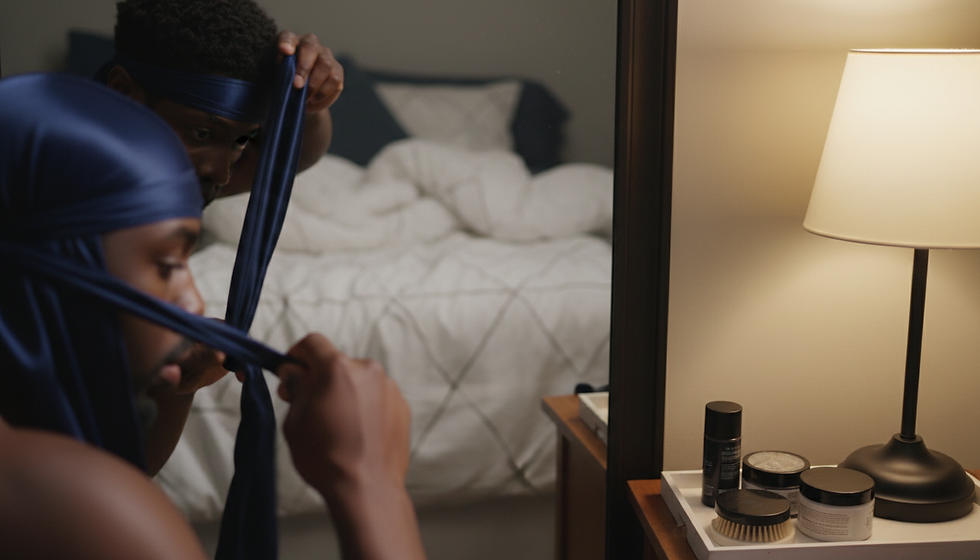
Wear my durag at night
Compression saved me. Brushing and then sleeping without a durag is like cleaning your room and letting your mate run through it with muddy trainers.
That was my wave brush routine. Simple. Boring. Effective.
And yes, boring is where the progress lives.

Step 3. Expect your 150s in the first few weeks
For me, the first real signs showed up around weeks two to four.
Not full 360s. More like 150s.
The top started laying down. The front had some ripple action. The sides were still acting brand new. The back of my head was basically refusing employment.
This is where a lot of people quit.
I almost did.
I remember standing in the bathroom one night, durag in one hand, brush in the other, looking at my hair like, “Mate, are we doing this or not?” I had been brushing every day, tying up every night, and still my sides looked like they had not received the memo.
I got annoyed. Put the brush down. Told myself I was done.
Then the next morning, I caught a tiny wave near the front in the mirror. One little ripple. Barely anything.
But I saw it.
That tiny ripple had me acting like I had just won a trophy.
So I kept going.
Weeks one to four are about:
Learning your angles
Training your hair to lay down
Getting used to brushing waves daily
Wearing your durag every night
Not panicking when progress looks uneven
The early stage is ugly sometimes. That does not mean it is not working.
Step 4. Give your 360s a real two to four months
This is where the 360 waves timeline gets real.
By month two, I started seeing better flow from the top to the sides. My pattern looked less patchy. The front connected better. The sides were still slower, but they were finally joining the group project.
By month three, I could say I had 360 waves without feeling like I was lying.
Were they elite? No.
Were they visible? Yes.
Would I still take 19 mirror photos after a fresh cut? Absolutely.
The big change was consistency. I stopped looking for shortcuts and just stuck to the process. Same brush angles. Same night compression. Same product amount. Same patience I did not naturally have.
A medium brush helped when my hair had some length. A softer brush helped after fresh cuts. A harder brush helped when my hair was thicker, but I had to be gentle. Scratching up your scalp is not a badge of honour.
The brush matters because different hair lengths need different firmness. But again, the brush only works if you use it.
A good session for me was not always an hour. Sometimes it was 10 to 15 minutes done properly. Clean strokes beat chaotic brushing.

Step 5. Understand that 720s take longer and need more control
Now, 720s are a different conversation.
With 360s, your pattern usually flows around the head from the crown. With 720s, the angles are more slanted, and the pattern spirals in a different way. It looks cold when done right, but it is not something I would rush into as a beginner.
I would not tell someone to start with 720s unless they are patient and ready to be strict with angles.
For many people, 720s can take several months or longer to look clean. The pattern needs time. Your crown needs attention. Your brush work has to be more controlled. If you keep changing direction, your hair will show it.
That does not mean 720s are impossible. They just ask for more discipline.
If 360s are like learning to drive, 720s are like trying to reverse park while your uncle is shouting instructions from the pavement.
You can do it. But relax first.
Step 6. Stop changing everything every week
This one hurt me.
I used to change products too much. One week a butter. Next week a pomade. Then some random oil. Then I would wonder why my hair was confused.
Product consistency helped more than product hunting.
I am not saying you need a bathroom shelf full of stuff. You just need products that keep your hair moisturised, help it lay down, and do not leave you feeling greasy all day.
For me, the winning combo was:
A brush that matched my hair length
A durag with good compression
A product I could use regularly
A routine I could actually stick to
That last one matters.
A routine that only works when you feel motivated will fail. Some nights I was tired. Some mornings I was rushing. I still tried to do something, even if it was shorter.
Small sessions add up.
Step 7. Judge progress after a wash and cut, not every five minutes
I get it. Checking the mirror is part of the lifestyle.
But staring at your hair every hour will make you lose your mind.
Real progress usually shows after a few proper cycles of brushing, washing, wearing your durag, and getting a clean cut. A fresh trim can reveal waves that looked hidden before. A good wash and style can reset your hair and show you what is actually connecting.
Just do not cut too low too early. I made that mistake once and felt like I erased half my progress. Pain.
Give your hair enough time to build a pattern before judging it too harshly.

What my real timeline looked like
Here is the honest version.
Stage | When I noticed it | What it looked like |
Early ripples | Weeks 2 to 4 | Mostly top and front, patchy sides |
Better 150s | Around month 1 | More laid down, still uneven |
Rough 360s | Months 2 to 3 | Pattern visible, weak spots still there |
Cleaner 360s | Months 3 to 5 | Better connections after cuts |
720 attempt | Later on | Needed stricter angles and more patience |
Your timeline might be faster or slower. That does not mean you are failing.
If your hair is trained, moisturised, compressed, and brushed in the right direction every day, you are doing the main things right.
The real answer nobody wants to hear
Getting waves is simple, but it is not easy.
Brush. Compress. Moisturise. Repeat.
That is the formula. Not magic. Not overnight miracles. Not one product that suddenly makes your whole head spin.
If I had to start again, I would keep it basic from day one. I would get the right brush, use a proper durag at night, stop changing products every week, and stop comparing my week two hair to someone else’s year two pattern.
If you are at the frustrated stage, stay with it a bit longer. Those ugly early weeks are part of it. The first ripple feels small until it turns into a pattern.
And if you need a simple place to start, I would casually point you towards the Rapid Wave Brushes wave brush starter pack and durags. No pressure. Just the kind of basics I wish I had sorted before I spent weeks brushing with zero plan.


Comments