
5 Wave Mistakes Ruining Your Progress And How To Fix Them
You ever look in the mirror after weeks of brushing and think, “Why my waves aren’t showing like they should?” Same.
The annoying part is, most of the time your waves are not stuck because your hair is “bad” or your pattern is cursed. You are probably doing one or two small things wrong every day, and those little things add up fast.
I have seen guys brush like they are sanding a garden fence, sleep with zero compression, slap half a tub of pomade on their head, then wonder why their wave progress stalled. Brother, the hair is confused.
So let’s talk real. These are the wave mistakes to avoid if you are tired of putting in work and seeing the same half-ripples every morning.

You are brushing way too much and calling it dedication
Let’s start with the one nobody wants to hear.
Yes, brushing builds waves. No, brushing for three hours until your scalp starts filing a complaint does not mean you are more committed than everybody else.
Over brushing waves is a real thing. When you brush too hard, too long, or too often without letting your hair rest, you can irritate your scalp, lift your hair instead of laying it down, and mess with the pattern you are trying to train. At some point, you are not training your hair. You are bullying it.
You know you are doing too much if:
Your scalp feels sore or tender
Your hair looks frizzy after sessions
Your waves look worse after brushing
You keep brushing with no compression afterwards
The fix is boring, which means it works. Brush with purpose.
A solid session beats a panic session. Do your angles properly. Brush from the crown out. Stay consistent. Then put on your durag and let the work set.
Think of brushing like pressing clothes. You would not iron a shirt for two hours then throw it on the floor. Same deal. Brush, lay it down, compress.
And please stop dry-brushing your head like you are trying to start a fire. If your hair feels rough, add a little moisture or a light leave-in before brushing. Little. Not a whole weather system.
You are using the wrong brush for your hair type
This one catches a lot of people because every brush looks like it should do the same job. It does not.
A soft brush, medium brush, and hard brush all have a place. The problem starts when you use the wrong one at the wrong time and then blame your hair.
If your hair is low and you are attacking it with a hard brush, you are probably scratching your scalp more than training your waves. If your hair is thick and wolfing and you are only using a soft brush, you are basically petting the top layer and hoping the rest gets the message.
It will not.
Here is the simple version:
Low cut
Medium length
Wolfing stage
Use a soft brush so you can lay the hair without tearing up your scalp.
Use a medium brush for daily training and better pull.
Use a firmer brush to reach deeper, then finish with a soft brush to lay everything down.
The brush should match your hair length and texture. Coarse hair usually needs more pull. Straighter or looser textures may not need as much force. If your brush is not reaching your hair properly, your pattern will stay weak. If it is too harsh, your scalp will hate you.
This is one of those common 360 wave mistakes that feels small until you fix it and suddenly your sessions actually start doing something.
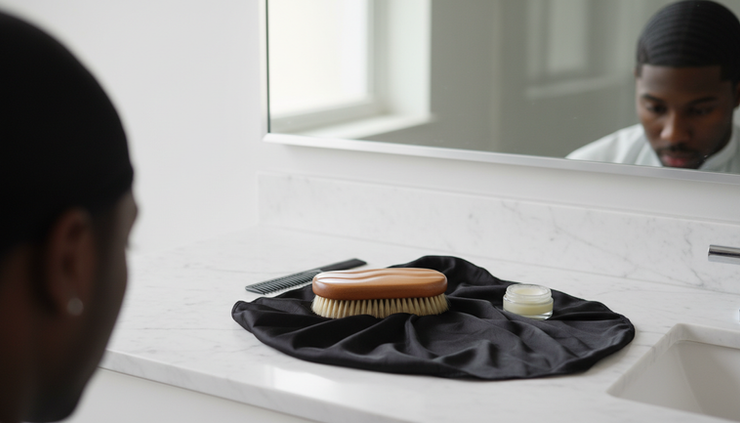
You keep skipping compression at night
I do not know who needs to hear this, but sleeping raw after brushing is nasty behaviour.
You can have the best brush session of your life, angles perfect, crown looking organised, hair laid like wet paint. Then you go to sleep with no durag, no wave cap, no compression, just vibes and pillow friction.
By morning, the pillow has won.
Night compression matters because your hair sets while you sleep. That is hours of contact. If your hair is not tied down, it can lift, shift, frizz, and lose the lay you worked for during the day.
This is especially brutal when you are wolfing. Longer hair wants to move. It needs guidance. A durag keeps the hair laid in the direction you brushed it, and a wave cap can add extra hold if your hair is thick or stubborn.
You do not need to turn your head into a bank vault. Just get even compression.
A few quick checks:
The durag should be snug, not cutting off your thoughts
The flap should lay flat over your crown
The strings should not leave deep marks across your forehead
If your hair still shifts, add a wave cap over the durag
And wash your durags. Please. If your durag smells like old gym bag and coconut oil, it is not helping your scalp or your social life.
You are using too much product
Product is supposed to help. Some of you are using it like you are seasoning chicken for a family barbecue.
A little pomade or moisturiser can help with shine, hold, and softness. Too much product weighs the hair down, clogs everything up, attracts lint, and makes your hair look greasy instead of healthy. Worse, it can trick you into thinking your waves are laid when really they are just stuck together.
That fake shine will humble you after one wash.
If your hair feels heavy, sticky, or dirty two days after washing, you are probably doing too much. If your brush has more product in it than your actual head, that is also a clue.
Here is the better move. Use product based on what your hair needs, not because you saw somebody online scoop out enough pomade to wax a car.
For most sessions, you only need:
A light moisturiser when your hair feels dry
A small amount of butter or pomade when you need hold
A brush session to spread it properly
Compression to lock it in
The brush distributes the product. Your durag sets the hair. The product is not meant to do the whole job by itself.
If your waves disappear the moment you wash out the pomade, they were not trained yet. That is not shade. That is just the mirror telling the truth.

You are cutting your hair too short too soon
This mistake hurts because the haircut feels so clean at first.
You leave the barber, line-up sharp, fade crispy, confidence up. Then you get home, look in different lighting, and realise your waves got evicted.
Cutting too low too early can set you back, especially if your pattern is not fully trained yet. Waves need enough hair length to form and connect. If you keep scalping yourself every time you start seeing progress, you never give the pattern time to deepen.
A fresh cut should reveal your waves, not erase them.
If you are early in the process or rebuilding after a rough patch, stop chasing the shortest cut possible. Give your hair time. Wolf a little. Let the curls stretch and learn the pattern. Then cut down carefully.
Talk to your barber too. Do not just sit down and say “same as last time” when last time left you looking like you restarted the tutorial.
Ask for a cut that keeps enough length for your texture. Coarser hair usually needs a different guard level than looser hair. If you are not sure, play it safe and leave more hair. You can always cut lower next time. You cannot glue it back on, unless you are entering a very different hair journey.
Your routine has no order, just random effort
This is not one of the five mistakes in the title, but it sits behind all of them.
A lot of stalled progress comes from doing the right things in the wrong order. You brush sometimes. Compress sometimes. Moisturise when your hair looks dry. Wash when it starts feeling disrespectful. Change brushes whenever you remember. Then you wonder how to fix stalled waves.
The fix is not some complicated ritual. You just need a repeatable routine.
Something like this works:
Moisturise lightly if your hair needs it.
Brush with the right brush for your hair length.
Hit your angles properly.
Finish with a soft brush to lay the top.
Compress with a durag, especially after sessions and at night.
Wash and style regularly so product does not build up.
That is it. Not magic. Just less chaos.
If you are trying to sort your brush setup instead of guessing, check out the Rapid Wave Brushes wave brush range and pick based on your hair length, texture, and where you are in the process.
Quick FAQ
How long should I brush for each session?
Aim for focused sessions instead of marathon brushing. Around 10 to 20 minutes is enough for many people if your angles are clean and you compress afterwards.
Should I wear a durag every night?
If you care about progress, yes. Night compression helps keep your hair laid while you sleep and protects your pattern from pillow friction.
Why do my waves only show when I use product?
That usually means your hair is being held down by product, not fully trained yet. Keep brushing, compressing, and washing properly so the pattern becomes more natural.
Is a hard brush bad for waves?
Not bad, just bad at the wrong time. A hard brush can help during wolfing, but it can be too harsh on a low cut or sensitive scalp.
Stop making your waves fight you
If your waves are stuck, do not panic and start changing everything at once. That is how you end up with six products, three brushes, an angry scalp, and the same weak pattern.
Keep it simple.
Brush with the right tool. Stop abusing your head. Compress at night. Use less product than your ego wants to. Do not cut all your progress off the second your hair starts looking good.
Most wave progress is not ruined by one big mistake. It is the small stuff you keep repeating because nobody called it out.
Now it has been called out. Fix the small stuff, and your waves will start acting right.


Comments